

Learning to Hate the Enemy Who Hates You
What a forgotten Holocaust-era novel teaches about the danger of making an enemy the center of your life.


I want to call your attention to a book that is unlike anything I have ever read. It is a novel called The Death of the Adversary. It was first published in German in 1959, in English in 1962. But it was written during WWII by a German Jewish refugee who wrote it while hiding from the Nazis in the Netherlands. That young man grew up to become a psychoanalyst who, according to the back cover copy, pioneered the treatment of war trauma in children.
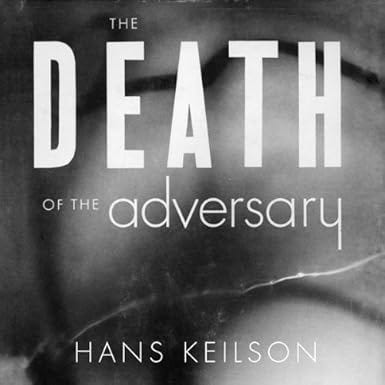
The book is written in first-person voice. We hear everything from the tunneled perspective of a child, then the clearer understanding of an adolescent, then the fully coherent rationality of a young adult.
It is uncanny how the narrator captures the perspective of a young child trying to understand the conversations his parents are having, trying to make sense of the anxiety in their voices even as their words are veiled, but he knows they are anxious, and he knows the veil must cover something terrible.
I frequently heard Father and Mother talk about this subject, mostly in the secretive, whispering voice of grown-ups who do not want the children to hear. A new kind of intimacy informed their words. They were talking in order to hide something. But children quickly learn to divine the secrets and fears of their elders, and to grow up towards them (p. 11).
We are (we think) in the real life experience of the author. Born in 1909, Keilson was a Jew coming of age in Germany just during and after WWI. But we don’t know this from him. From Keilson. He doesn’t tell us this in the book. We never get his name. We never get his parents’ names. We never see the word “Jew” or “Jewish.” We never get any dates.
You have to know the history. If a boy in Germany whose age tracks with Keilson’s hears his parents sounding anxious about a politician saying hateful things about their group, if you know the history you can put two and two together. When Father says…
If B. should ever come to power, may God have mercy on us. Then things will really start to happen (p. 11).
Then you know that Father must be talking about some very early rabble-rousing by a young Army corporal named Adolf Hitler, and you know that Father and family are Jewish, and you know that even though it is at least ten years before he comes to power, we know that — oh my God — he does come to power, and we know about what happened after that overall, and we wonder about what this is going to mean for our Narrator and his parents.
And soon after this scene with has parents we get more and more vignettes from Narrator Boy’s childhood, and schoolboy days, and early work experiences, and time with a kind of girlfriend, most of them centering around how politician B. was in the very process of actually rising to power and poisoning the minds and culture and young people and eventually the law of Germany in a way that increasingly affected the actual life of Narrator and his family.
But the heart of the narrative is not so much those details but the way that young Narrator’s character is being (mal)formed — and he knows it, and he watches it, and he talks about it — through his fascination with and growing hatred of this man B., his “adversary.” And how over time, more and more, the imagined death of this adversary becomes the center of the emotional life of the Narrator.
I can make the dreamscape/horrorscape of this novel even clearer by working backwards in the plot development.
Because even before we get the first childhood story — recounted above — it seems an older Narrator is speaking in the present tense about something that has just happened or is about to happen:
For days and weeks now I have thought of nothing but death…I welcome the day which brings me once again the thought of death. With every breath I take, the thought penetrates further into my body, down into its most hidden recesses, and fills it entirely. It is death, death that guides my pen! (p. 7)
These are the very first words from the Narrator. But he goes on to say:
It was the thought of my enemy’s death which penetrated me and made me shudder as one does on an icy night. The death of my enemy—I think of it with all the joy a thought can have for those to whom a thought is something vital and alive (p. 9).
And this:
I wish that he who throughout his life knew that he was my enemy, as I was his, should carry into his hour of death the knowledge that my thought of his death will be worthy of our enmity. I will not relinquish one inch of this enmity. It remains our imperishable possession, even in his last hour on earth (pp. 9-10).
From my knowledge of the history, if it is at all relevant to what Narrator is doing here, the actual author Keilson may have been writing about the time in Spring 1945 when he knew that the genocidal dictator Hitler was very near his death, a death which Narrator, and presumably Hans Keilson, devoutly had sought from and in the very marrow of his soul for the better part of two decades. So, in hiding in the Netherlands, writing through the thin veil of anonymity and pseudonymity, the author writes honestly of his anticipation of the death of his adversary at last, the adversary who had delivered so much suffering and death to others.
